Plumbing Leads Get Replies but No Bookings: Fix the Dispatcher Handoff
“Thanks, we’ve received your message” can be the last thing a plumbing customer hears from you. Your CRM shows a reply. Your dispatcher sees no confirmed job. The customer calls the next plumber because nobody has told them what happens now.
Let’s fix the gap between an automatic acknowledgement and a useful human response. We’ll use GHL to notice when a routine SMS enquiry still needs a dispatcher, then put the conversation back in front of its owner.
First, give the customer something they can act on
EXAMPLE ACKNOWLEDGEMENT
Thanks for contacting [Plumbing Company]. Please reply with your postcode and a short description of the work. Our office will check whether we cover your area and contact you about availability. This message does not confirm a visit.
Now your dispatcher has two useful details to work with. They check the service area and the live dispatch board before offering a callback or a real appointment. An urgent or unsafe situation must follow your business-approved emergency route, not wait in this routine enquiry process.
Now check for a staff reply, not another automated text
In the workflow below, we’ve chosen Until a user replies, selected SMS, and allowed a reply from any staff user. The review interval is five minutes. If a staff member replies while the contact is waiting, that branch ends. If the interval expires, GHL creates an in-app notification for the contact owner and links it to the conversation.
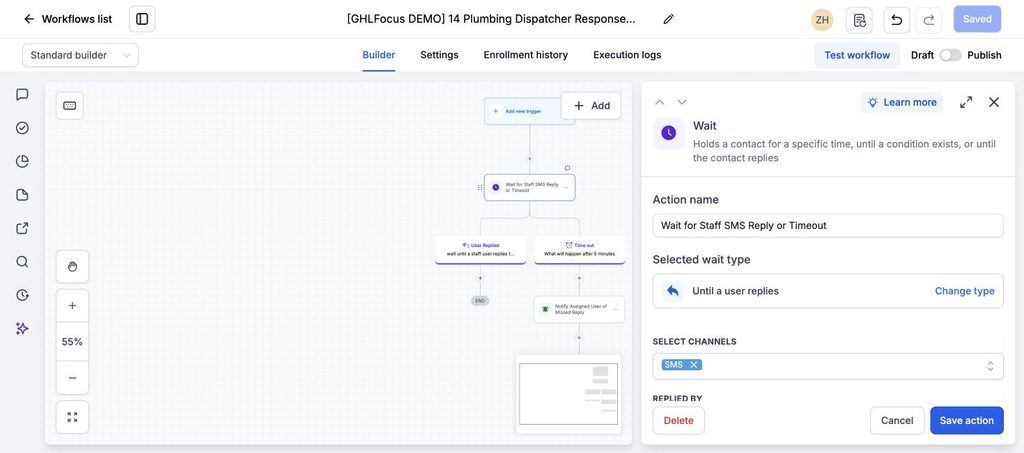
This is the important distinction: a timed acknowledgement is not the event we are waiting for. We want someone on your team to read the request and reply. The timeout notification asks the owner to check the conversation and dispatch board, then agree a verified callback or escalate to the backup dispatcher.
What should the dispatcher actually say?
EXAMPLE STAFF REPLY
We cover [postcode] and can help with [requested work]. I’m checking availability with our dispatcher now. Would you prefer a callback on this number, or to continue here? We’ll confirm a time before any visit is booked.
Replace “we cover” and “can help” only after checking both facts. If you have a verified appointment available, offer that instead of making the customer repeat their request through a general booking form.
| What happens | What your team does next |
|---|---|
| Staff replies within the interval | Continue the conversation and record the agreed callback or booking. A reply alone is not a completed job. |
| No staff SMS reply | Contact owner receives the conversation-linked notification. Your backup procedure must cover unavailable or unassigned owners. |
| Dispatcher calls instead of texting | Record the call outcome and connect a separate exit before launch. This SMS-only check does not prove that a phone conversation happened. |
Connect these pieces before switching it on
The saved example is inactive and has no entry trigger; it has not contacted anyone. We still need to connect the incoming-enquiry event, assign an available owner, respect operating hours, and prevent duplicate entries. We’ll also handle replies that arrive before the wait starts and stop the check when the request is booked, declined or already resolved.
For a safe test, use an internal contact: leave one enquiry unanswered, reply to another as a staff user, and resolve a third by phone. Check the actual branch and notification recipient in each case. GHL documents the staff-reply wait and timeout options here.
Measure the handoff that matters
Compare time to first useful staff response, enquiries with an agreed next step, and confirmed jobs. Counting automatic replies will not tell you whether the dispatcher gap has closed.
Let’s fix the gap between a reply and a booking
For a GoHighLevel enquiry journey that still loses the dispatcher handoff, see our $200 workflow audit. It provides test evidence and prioritized findings; repairs are scoped separately. Related guide: plumbing missed-call recovery.