AI Receptionist vs Website Chatbot: Which One Does Your Business Actually Need?
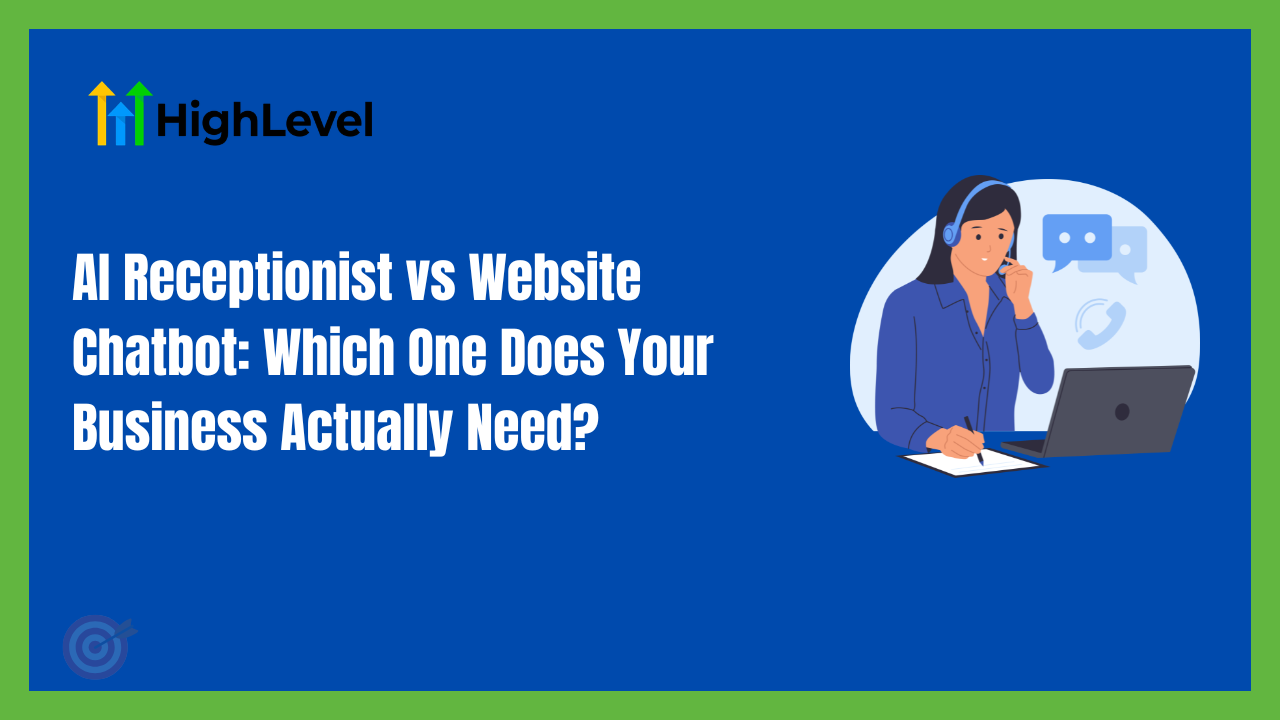
Let me give you the short answer first: an AI receptionist and a website chatbot solve different parts of the same problem. A website chatbot helps someone who is already browsing your pages. An AI receptionist handles the person who picks up the phone and expects an immediate answer. If your business is product-led, I would normally look at chat first. If your customers prefer calling, the receptionist is usually the stronger starting point.
So, do you need both? Sometimes, yes. But I would not start with both simply because the technology is available. When we plan this for a business, we begin with the channel where the most valuable conversations already happen. That gives your team one focused journey to test before we add another moving part.
The rule I use: If your customer needs to inspect products, plans or written information before deciding, chat usually has the advantage. If they call because they need an answer, estimate or appointment now, voice usually has the advantage.
Once you know which channel fits the customer journey, review the GoHighLevel AI Employee plan differences before estimating the cost of running the receptionist, chatbot or both.
Let us start with the real difference
A website chatbot works inside the browsing journey. It can explain a product, answer a question about a page, collect contact details and guide the visitor toward the correct next step.
An AI receptionist works inside the phone journey. It can answer an inbound call, ask approved questions, book an appointment, send information and transfer the caller when a person needs to take over.
| Decision | Website chatbot | AI receptionist |
|---|---|---|
| Where it works | Website or landing page | Inbound phone calls |
| Best first job | Help visitors choose and enquire | Answer, qualify and route callers |
| Context available | The page, product and visitor question | The live call and approved business knowledge |
| Useful handoff | Assign the conversation or offer a booking | Transfer the call or create a callback task |
| Common mistake | A generic FAQ bot with no clear goal | Letting AI answer questions that require judgement |
When chat is usually the better first choice
Think about someone comparing products on your website. They usually want to browse before speaking to anybody. They may need help finding the right category, understanding what is included or deciding whether the product matches their situation.
This is where chat feels natural. The visitor can keep the page open, ask a specific question and move to the relevant product, resource or booking path without changing channels.
Let me show you what worked on LMS Crafter
On LMS Crafter, we see visitors arrive with very different jobs in mind. One person needs LearnDash help. Another is planning a membership site. Somebody else has a WordPress problem or is ready to discuss a project.
We do not ask one generic chatbot to improvise its way through all of that. The assistant opens with clear routes such as LearnDash help, membership site, WordPress fix or maintenance, and booking a call. It can still answer free-form questions, but the guided choices make the first decision easier.
That chatbot has become a useful part of the LMS Crafter sales journey because the products and services already live on the website. The assistant helps visitors navigate what is there. It does not pretend to replace the specialist who scopes the project.
When voice is usually the better first choice
Now think about a service business. The enquiry often starts with a call because the customer believes the problem is urgent or wants to check availability. A dentist may receive a new-patient call. A roofer may receive a storm-damage enquiry. A solar company may need to identify the property and service area before booking a consultation.
In these situations, making the caller open a website and start typing adds friction. The AI receptionist can meet the customer in the channel they already chose.
A useful receptionist can:
- Explain approved services, hours and locations.
- Collect the minimum information needed for the next step.
- Book the correct calendar when the request is straightforward.
- Send a confirmation or follow-up message.
- Transfer urgent, sensitive or complicated calls to a person.
HighLevel currently supports appointment booking during Voice AI calls and can route a caller across eligible calendars when the setup is configured correctly. It also supports human call transfer. The important part is deciding which calls should never remain with the AI. See HighLevel’s current Voice AI appointment-booking guide and call-transfer documentation.
So, when do you actually need both?
Okay, so this is the point where businesses usually overcomplicate the answer. If your customers regularly move between the website and the phone, you may need both. But I would not build two separate AI systems. I would connect both entry points to the same contact record, approved knowledge, pipeline and human handoff.
For example, a visitor may ask the website chatbot about a service and leave a phone number. The conversation can create or update the contact. If that person later calls, the receptionist should see the same journey instead of starting from zero.
If this were your business, where would I start?
I would not begin with a software feature list. I would sit down with your team and answer these questions:
- Where do qualified enquiries arrive today? Check calls, forms, chat and direct messages.
- Which channel creates the most expensive delay? A low-volume channel may still matter if those enquiries are valuable.
- What can be answered safely? Separate approved information from advice that needs a specialist.
- What is the desired next step? It might be a purchase, consultation, estimate, support ticket or human callback.
- Who owns the handoff? Automation without a named owner simply moves the delay.
At GHLFocus, we normally build one route first and test it with real questions. Once that route is stable, adding another channel becomes much easier because the qualification rules, calendar and handoff already exist.
What I would test before calling it ready
- Does the agent say when it does not know an answer?
- Can someone ask for a person at any point?
- Does the booking use the correct calendar and timezone?
- Are contact details saved to the correct fields?
- Does the team receive enough context after a handoff?
- Are sensitive or urgent questions routed immediately?
- Can the customer opt out of further communication?
HighLevel’s Conversation AI can answer questions, collect information, support appointment booking and trigger workflows across supported channels. Its human-handover action can also move a conversation to a team member when the bot reaches its boundary. Those capabilities still need a real operating process behind them. See the current Conversation AI setup guide.
AI receptionist vs website chatbot FAQs
Can a website chatbot book appointments?
Yes. A properly configured chatbot can collect information and guide a visitor into an available calendar. The calendar, qualification rules and confirmation workflow should be tested before the bot is allowed to book live appointments.
Can an AI receptionist replace the front desk?
It can handle defined conversations, but it should not replace judgement, empathy or specialist advice. Most businesses need clear transfer rules so the AI handles routine calls while people handle sensitive, unusual or valuable conversations.
Should a small business launch chat and voice together?
Usually not. Start with the channel where missed opportunities are most visible, prove the workflow and then add the second channel. A focused first launch is easier to train and monitor.
What information does GHLFocus need before building one?
We need the services or products, approved answers, booking rules, lead fields, escalation conditions, operating hours and the person who owns each handoff. We then build and test the journey around those rules.
GHLFocus
Not sure whether chat or voice should come first?
We can map the real enquiry journey and recommend the smallest system that answers, qualifies and hands off correctly.
Discuss Your Lead JourneySee how we build AI chatbot and voice-agent systems.