GoHighLevel Missed Call Workflow: DIY vs Done-for-You Setup
A GoHighLevel missed call workflow should not pretend every caller wants the same thing. Its first job is to acknowledge the missed call and create an easy path to a person or appointment. Everything after that depends on the reply.
The practical blueprint
- Trigger: an eligible inbound call is missed.
- Guardrails: exclude spam, blocked numbers, existing active conversations and calls outside the intended locations.
- Immediate message: identify the business, acknowledge the call and ask one useful question.
- Route the reply: send urgent or complex requests to a person; send booking intent to the correct calendar.
- Wait and check: look for a reply, callback or booking before any reminder.
- One follow-up: send a short second message only when no response exists.
- Stop: exit after reply, booking, opt-out, invalid number or human takeover.
Use a message a human would send
A useful first message is specific and easy to answer:
Hi {{contact.first_name}}, this is {{custom_values.business_name}}. Sorry we missed your call. Are you trying to book, change an appointment, or ask a question?
The options are not meant to trap the caller in a bot. They help the team route the response quickly. Replace the choices with the three most common reasons people call that business.
Borrow the correct pattern from no-show recovery
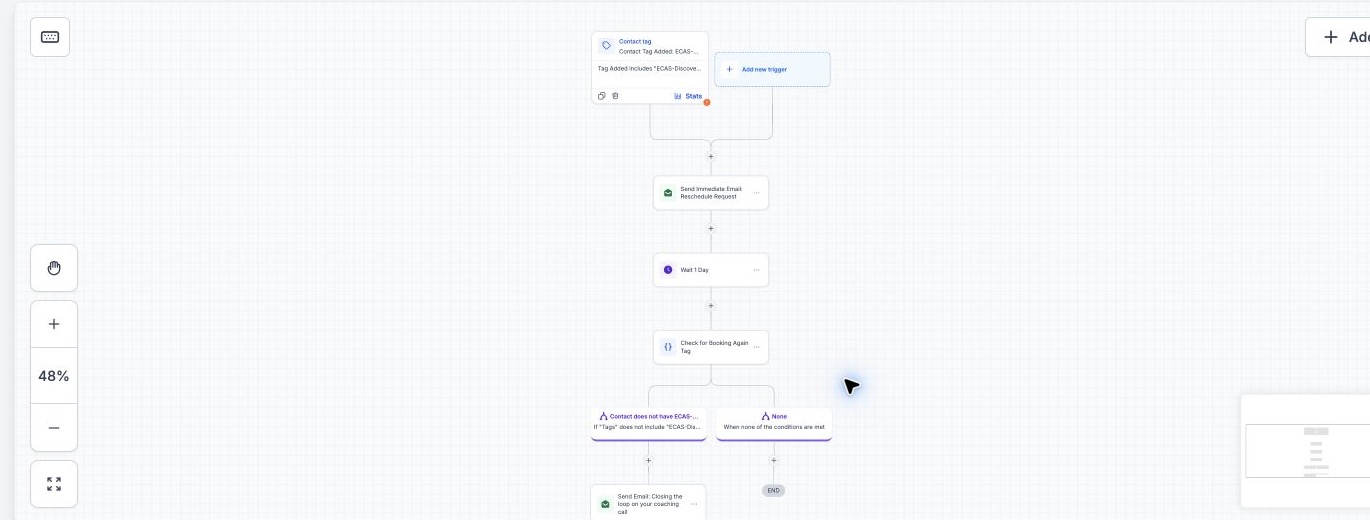
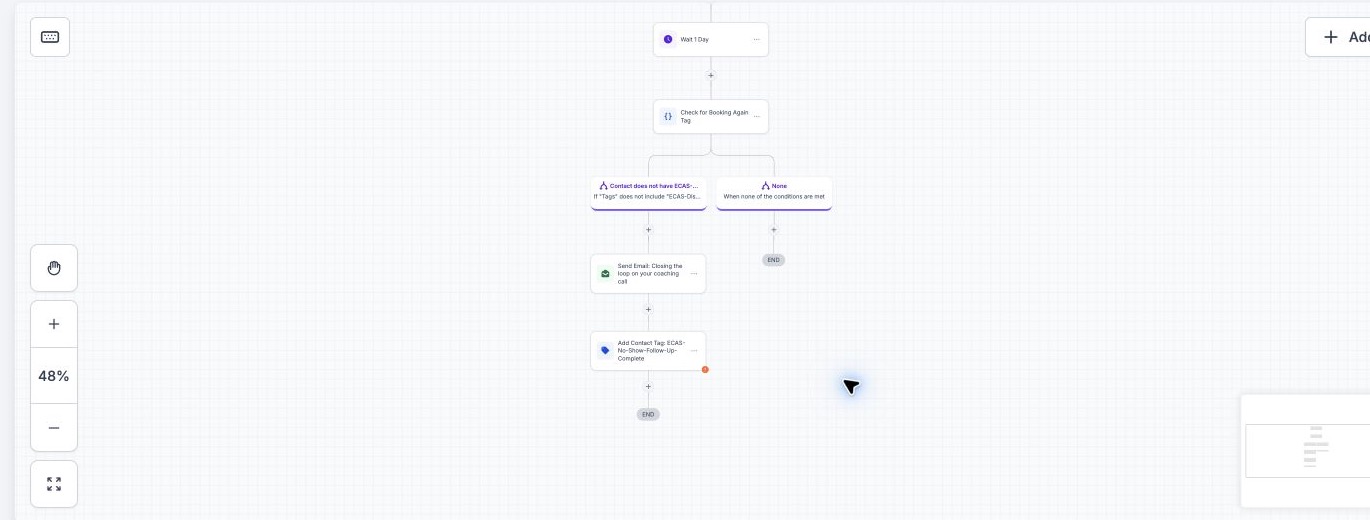
Our executive-coaching no-show workflow uses a pattern that also belongs in missed-call recovery: send one clear recovery message, wait, check whether the goal happened and send a closing message only when needed. The trigger and copy differ, but the stop logic is the same.
Data the team should see
- Call time, number and location
- New or existing contact
- Reply category and original message
- Assigned owner and response deadline
- Booking or callback status
- Opt-out or delivery failure
Test cases before launch
Miss a call from a new contact, an existing open opportunity, a landline, a blocked number and a contact who has opted out. Then test replies for booking, urgent help and a general question. Confirm the right person is notified and no reminder sends after a reply or booking.
Keep the first version deliberately small
The minimum useful version needs one eligible missed-call trigger, one acknowledgement, reply routing, a booking or human path, one conditional follow-up and reliable stop rules. Add AI classification or niche-specific branching only after the basic journey passes. More branches create more places for a caller to be misrouted or contacted after the conversation is already resolved.
Measure the workflow honestly
Track eligible missed calls, delivered acknowledgements, replies, human handoffs, bookings and opt-outs. Do not report every text reply as a recovered lead. Define the business outcome before the campaign starts.
Do you need a build, review or repair?
Use this blueprint yourself when one location, one calendar and one team own the response. Request a review when the workflow exists but callers receive duplicate messages, reach the wrong calendar or remain in automation after a reply.
A managed build is the better fit when routing spans multiple locations, calendars or teams, or when AI handles replies. Our GoHighLevel missed-call recovery service maps the call types, configures the workflow, tests the edge cases and documents the handoff.
If an AI assistant handles replies, also test the nine AI-to-human handoff failures before launch.